How integrated leadership, governance, organisational capability and disciplined execution helped translate a complex offshore transformation into measurable enterprise performance.
Executive Summary
Husky-CNOOC Madura Limited, HCML, was advancing a major offshore HPHT sour-gas development in Indonesia within a complex joint-venture, regulatory and multi-country delivery environment.
The enterprise challenge extended well beyond technical execution. Sustainable performance depended on integrating operational governance, leadership accountability, stakeholder alignment, organisational capability, risk management and workforce development into a coherent transformation system.
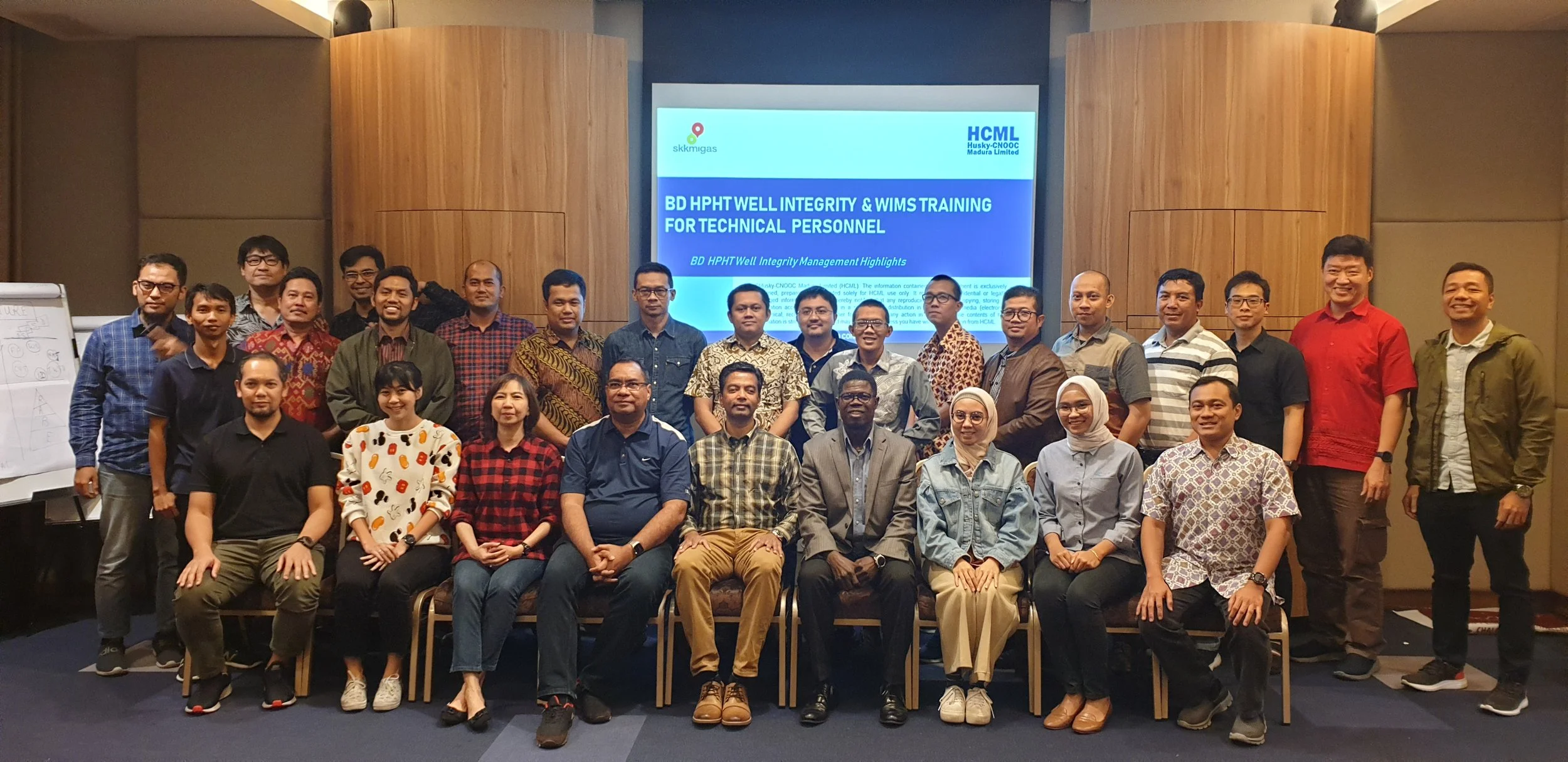
In his corporate executive role as Head of Completion and Well Integrity, Mike Etuhoko worked across executive leadership, board representatives, partners, regulators, technical functions and international service organisations to strengthen this system.
The wider transformation was associated with approximately US$200 million in annual profit uplift, 60% year-on-year improvement in operational performance and zero recordable incidents across project execution phases.
The significance of the experience lies not simply in the operating metrics. It demonstrates how organisational capability, governance discipline and leadership effectiveness can become direct contributors to enterprise value.
Client Context
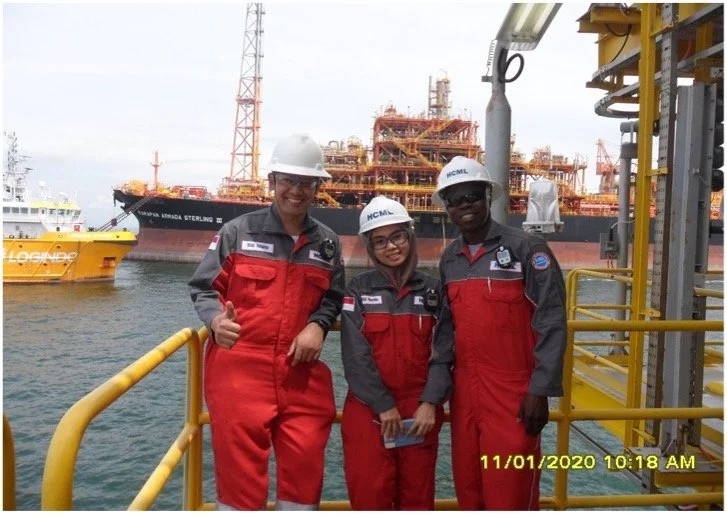
HCML was developing a major HPHT sour-gas asset in Indonesia within a joint-venture environment involving international partners, regulatory stakeholders, major service organisations and globally distributed supply chains.
The operating context represented approximately US$2 billion in development scale and required coordination across a large multinational delivery ecosystem.
Success depended on more than completing technically demanding work safely. The organisation needed a leadership and governance system capable of integrating technical performance, operational discipline, workforce capability, stakeholder expectations, risk management and long-term asset integrity.
This made the transformation an enterprise leadership challenge as much as an engineering one.
Strategic Challenge
High-consequence transformations often fail at the interfaces between strategy and execution.
Technical teams may be capable. Governance processes may exist. Senior leaders may be committed. Yet enterprise value remains exposed when responsibilities are fragmented, escalation is inconsistent, stakeholders operate from different assumptions or organisational capability is insufficient to sustain the required performance.
HCML needed to strengthen the system surrounding execution.
The challenge was to create clearer accountability, stronger lifecycle governance, more disciplined decision-making, better integration across organisational boundaries and deeper internal capability while maintaining delivery performance within a technically demanding operating environment.
Enterprise Objectives
The transformation priorities were to:
strengthen governance and accountability across the operating system
improve alignment between technical decisions and enterprise outcomes
build stronger cross-functional and stakeholder coordination
institutionalise lifecycle integrity and risk management
strengthen leadership ownership at multiple organisational levels
develop Indonesian technical and leadership capability
reduce dependence on individual expertise
support reliable, safe and commercially effective execution
create organisational capability capable of sustaining performance beyond the immediate project
Approach
1. Integrated Transformation Leadership
Leadership attention was directed beyond individual functions toward the performance of the whole system.
The operating model brought together internal teams, international service organisations, executive stakeholders and external partners around common performance requirements.
The objective was not simply coordination. It was shared accountability for enterprise outcomes.
2. Governance Embedded Into Execution
A Well Integrity Management System was conceptualised and implemented to create stronger lifecycle governance.
This connected technical integrity, surveillance, risk identification, escalation and accountability within a structured management framework.
The significance for the organisation was broader than the system itself. Governance moved closer to the decisions and behaviours through which enterprise risk was actually created or controlled.
3. Executive and Stakeholder Alignment
Complex joint-venture environments create multiple centres of influence.
Senior engagement with executives, board representatives, partners and regulators was used to create greater clarity around priorities, risk, accountabilities and execution expectations.
Alignment was therefore treated as a performance requirement, not simply a communications activity.
4. Organisational Capability Development
A structured leadership and technical development programme strengthened the organisation's internal capability.
Development was linked to actual operating responsibilities, decision-making and accountability rather than treated as a stand-alone training intervention.
The aim was to create a more capable organisation, not simply more knowledgeable individuals.
5. Digital and Lifecycle Discipline
Digital surveillance and lifecycle management strengthened visibility over asset condition and emerging risk. This created a stronger basis for timely intervention, management attention and informed decision-making.
Technology supported the transformation, but organisational discipline remained the critical enabler.
Key Leadership and Organisational Shifts
The transformation supported several material shifts.
From functional excellence to enterprise ownership. Leaders were expected to understand how decisions within their areas affected wider performance, risk and value.
From fragmented accountability to clearer ownership. Responsibility became more directly connected to decisions and outcomes.
From reactive integrity management to lifecycle governance. Risk was managed through a more systematic, forward-looking architecture.
From stakeholder coordination to stakeholder alignment. Engagement focused increasingly on shared priorities and decision requirements.
From dependence on specialists to broader organisational capability. Technical knowledge and leadership responsibility were developed more widely across the organisation.
From leadership development as an HR activity to capability as an enterprise requirement. Development became connected to performance, resilience and succession.
Outcomes
The wider transformation produced significant enterprise outcomes:
approximately US$200 million in annual profit uplift
approximately 60% year-on-year improvement in operational performance
zero recordable incidents across project execution phases
stronger lifecycle governance through an institutionalised well-integrity management system
stronger Indonesian workforce and leadership capability
clearer cross-functional accountability
increased organisational capacity to manage complex operating risk
stronger alignment between technical execution and enterprise objectives
These outcomes should not be interpreted as the result of any single intervention. They reflect an integrated transformation in which leadership, governance, organisational capability, technical execution and stakeholder alignment operated together.
Client Impact
The organisation developed a stronger management system around complex execution.
Technical capability was reinforced by clearer governance, greater leadership ownership and stronger cross-functional discipline.
Executives and operational leaders gained a more integrated basis for understanding performance, risk and accountability.
The result was greater organisational capacity to translate technical expertise into sustained enterprise performance.
Business Impact
The most important business lesson from HCML is that enterprise value was created through the interaction of multiple capabilities.
Technical excellence mattered.
So did governance.
So did stakeholder alignment.
So did leadership.
So did organisational capability.
The approximately US$200 million annual profit uplift and 60% year-on-year improvement occurred within a transformation environment where these capabilities were deliberately strengthened alongside operational execution.
For boards and CEOs, this is an important distinction. Transformation performance rarely depends on one workstream. Value is created when the organisation can align strategy, leadership, governance, people and execution around the same enterprise outcomes.
Governance and Leadership Implications
HCML illustrates several implications for senior leadership.
Governance is most valuable when it improves operating decisions rather than merely increasing reporting.
Leadership capability becomes an enterprise asset when it strengthens accountability and execution across organisational boundaries.
Stakeholder alignment must extend beyond agreement at the top. It must influence decision rights, behaviours and execution.
Capability development should therefore be treated as part of transformation architecture, particularly where organisational performance cannot depend indefinitely on a small number of experienced individuals.
For boards, the wider question is whether management has built an organisation capable of sustaining the strategy after the initial transformation effort ends.
Executive Lessons
Transformation is a system, not a collection of projects.
Leadership, capability, governance and execution must reinforce one another.
Enterprise value can be lost between functions.
Cross-functional accountability therefore deserves executive attention.
Governance must influence decisions where risk is created.
Frameworks alone do not protect value.
Capability is part of enterprise resilience.
An organisation becomes more resilient when knowledge, judgment and ownership are distributed rather than concentrated.
Sustainable performance requires institutionalisation.
The objective of transformation is not simply improved results today. It is an organisation better able to reproduce those results tomorrow.
Selected Testimonial
“Mike’s contribution to HCML’s $2 billion offshore development was exceptional. He led the development and implementation of a Well Integrity Management System that strengthened governance, risk oversight, operational discipline, and ESG alignment in a complex offshore environment. His impact went beyond technical execution. Through senior stakeholder engagement, leadership capability development, and disciplined operational leadership, Mike helped translate risk management into measurable enterprise value: approximately $200 million in annual profit uplift, a 60% year-over-year improvement in operational performance, and a zero-incident safety record across project execution phases.”
Lian Jihong, Chair & Country Manager, CNOOC International, Guyana
Strategic Themes Demonstrated
Enterprise Transformation
Enterprise Value Creation
Transformation Leadership
Governance Effectiveness
Strategic Execution
Organisational Capability
Stakeholder Alignment
Leadership Effectiveness
Operational Excellence
Enterprise Resilience
Sustainable Performance