Gain Your Edge | #33
The Architecture of Enterprise Trust
Trust is often treated as a cultural issue.
Something built through values, communication, leadership style, and relationships.
All of that matters.
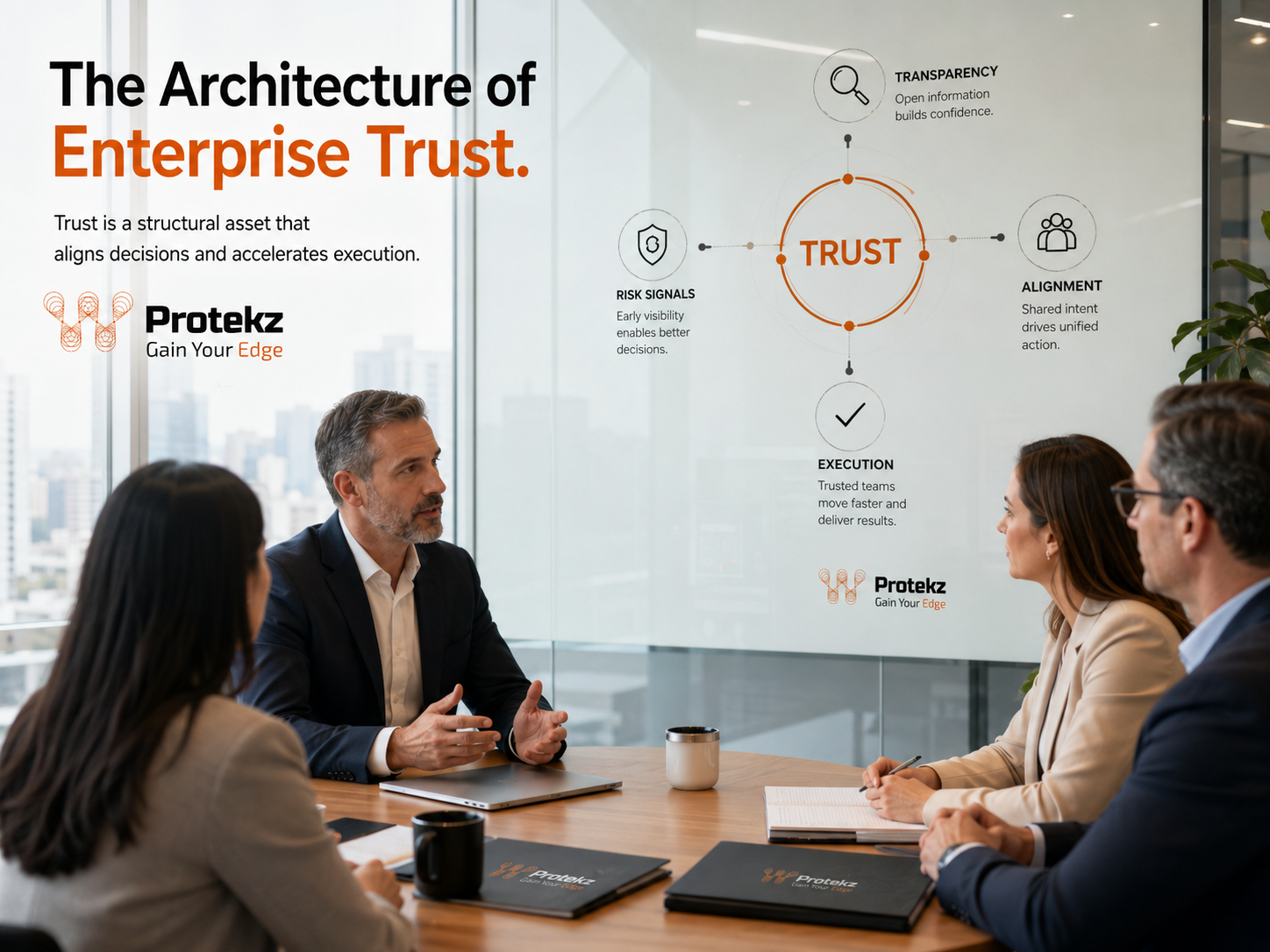
But in serious organizations, trust is also structural.
It is shaped by how decisions are made, how information moves, how accountability works, how risk is surfaced, and how leaders behave when pressure rises.
That is why trust is not soft.
Trust determines speed.
When trust is strong, information travels faster. People raise concerns earlier. Leaders challenge without personalizing disagreement. Teams make decisions with less defensiveness. Boards receive clearer signals. Executives can move with greater confidence, even when certainty is limited.
When trust is weak, everything slows.
People withhold information.
Meetings become cautious.
Bad news arrives late.
Functions protect themselves.
Accountability becomes negotiation.
Stakeholders wait for proof before extending confidence.
The organization may still operate, but it carries hidden friction.
Last week, I wrote that resilience is not recovery. Real resilience is the ability to anticipate, adapt, and protect value before disruption becomes decisive.
Trust is one of the operating conditions that makes that possible.
Without trust, early signals are often ignored, softened, or trapped inside functional boundaries. Leaders may see the problem, but hesitate to name it. Teams may understand the risk, but wait for permission. Boards may receive polished updates instead of the uncomfortable pattern.
That is how organizations lose time.
And under pressure, time is strategic.
For boards, trust should not be viewed only as culture. It is a governance asset. A board cannot govern what it cannot see, and it cannot see clearly if the system does not allow truth to travel.
For CEOs and executive teams, trust is not about avoiding challenge. It is what makes challenge useful. High-trust teams can disagree, test assumptions, expose weak logic, and still move together.
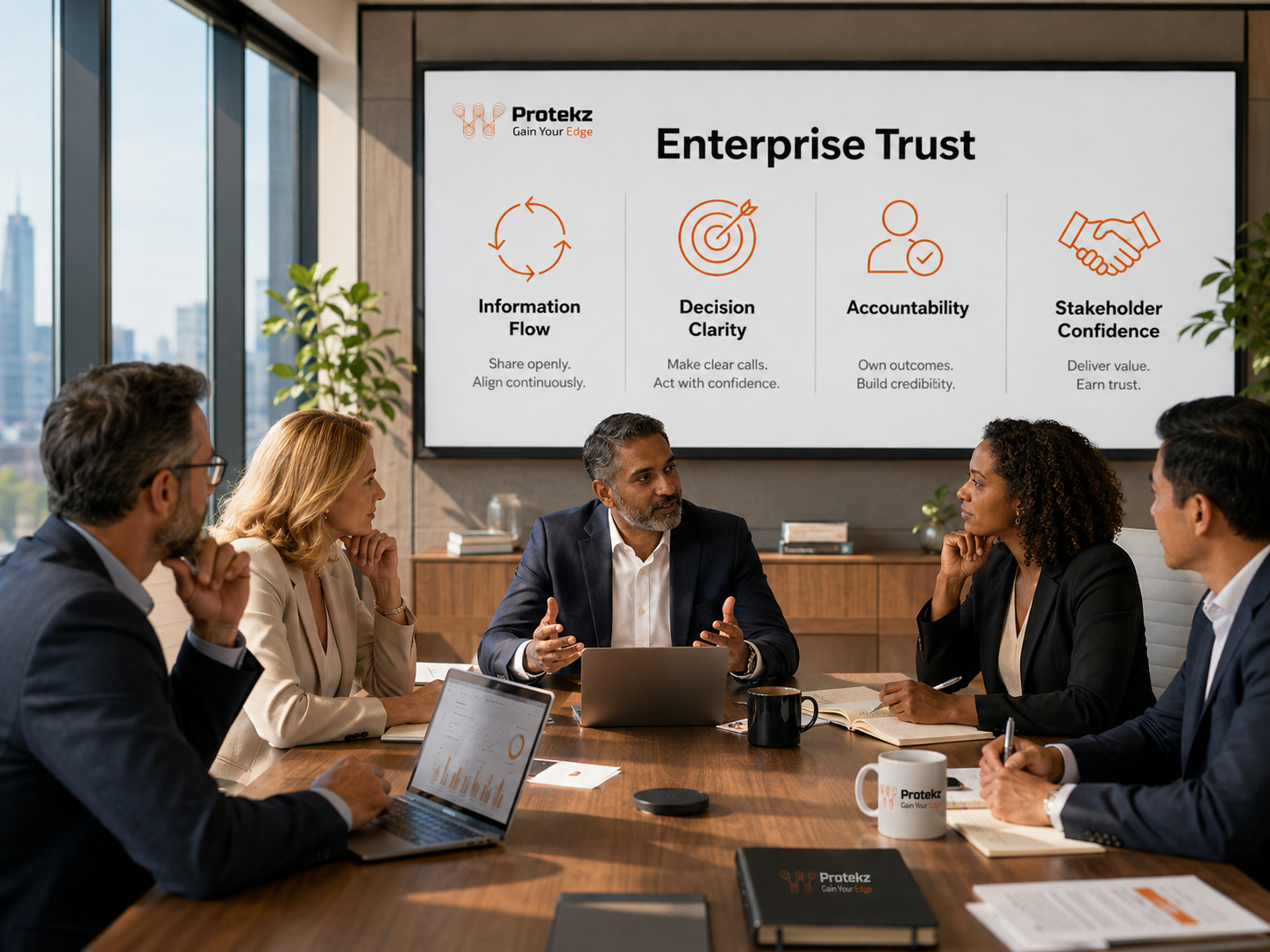
The strongest organizations do not rely on trust as goodwill alone.
They design for it.
They clarify decision rights.
They make accountability visible.
They reward candour early, not heroics late.
They align incentives with enterprise outcomes.
They create forums where risk can be discussed before it becomes a crisis.
That is the architecture of enterprise trust.
It is built through repeated leadership choices, reinforced by governance discipline, and tested under pressure.
The board-level question this week is:
Where does trust accelerate execution in our organization, and where does low trust create hidden cost?
Because trust is not simply how people feel about working together.
It is how quickly the organization can see, decide, adapt, and act when it matters.
Mike Etuhoko, MBA, AccBD, GCB.D, CCB.D, ACC
Founder & CEO, Protekz Inc.
Sloan Fellow, London Business School
🔗 LinkedIn: https://www.linkedin.com/in/mike-etuhoko
