Gain Your Edge | #35
Institutional Endurance Beyond the Current Leadership Team
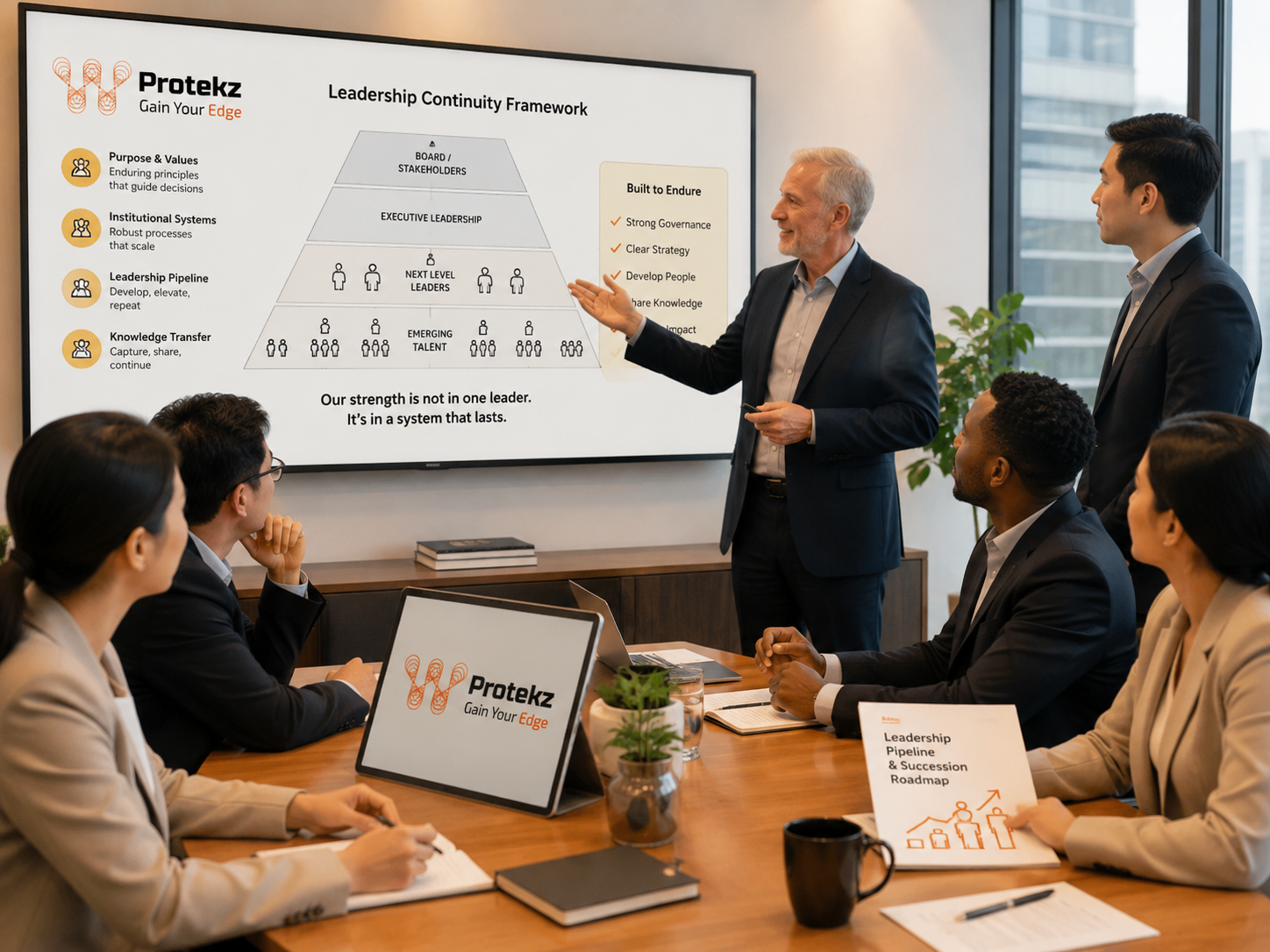
Some organizations are carried by exceptional leaders.
A strong CEO.
A trusted founder.
A high-performing executive team.
A respected board chair.
A few senior people who know how the organization really works.
That kind of leadership matters.
But it also creates a question boards cannot avoid:
Is the organization genuinely strong, or is it being held together by a small number of exceptional individuals?
This distinction matters because institutional endurance is not the same as leadership excellence.
Leadership excellence can drive performance for a season. Institutional endurance protects the organization beyond the current team, current strategy cycle, and current operating conditions.
Boards have a duty to think at that level.
Continuity is not only about naming successors. Capability is not only about developing talent. Long-term value is not only about strategy.
Endurance requires institutional discipline.
It requires decision quality that does not depend on one person’s judgment.
Trust that does not depend on one leader’s personality.
Alignment that survives executive transition.
Risk awareness that remains visible when conditions change.
Governance that keeps asking the right questions before pressure becomes crisis.
Leadership capacity that is deliberately built across levels, not concentrated at the top.
Last week, I wrote that alignment becomes a strategic risk when it has not been tested under pressure. This week extends that question further.
Can alignment outlast the people currently creating it?
Many organizations discover too late that what looked like institutional strength was actually personal influence. The trusted leader leaves. The board chair changes. A senior executive retires. A founder steps back. Suddenly, decisions slow, relationships weaken, assumptions resurface, and old tensions return.
That is not a succession issue alone.
It is an institutional design issue.

For boards, the deeper question is not simply, “Who is next?”
It is, “What must remain strong no matter who is next?”
That includes culture, governance habits, decision discipline, enterprise trust, leadership pipeline, strategic clarity, and the ability to adapt without losing coherence.
For CEOs and executive teams, endurance means building systems that do not depend on constant heroic intervention. It means making judgment visible, codifying decision principles, developing leaders earlier, and strengthening the routines that help the organization think and act as one enterprise.
The strongest organizations do not just produce strong leaders.
They build leadership capacity into the institution.
That is what allows an organization to absorb transition, face uncertainty, and protect value without losing direction.
The board-level question this week is:
What capabilities must outlast the current executive team?
Because the real test of leadership is not only what happens while today’s leaders are in the room.
It is what continues to hold when they are not.
Mike Etuhoko, MBA, AccBD, GCB.D, CCB.D, ACC
Founder & CEO, Protekz Inc.
Sloan Fellow, London Business School
🔗 LinkedIn: https://www.linkedin.com/in/mike-etuhoko
