KPO: Enterprise Leadership & Succession
Building leadership depth, national capability and institutional resilience during a major multi-year enterprise transformation.

Executive Summary
Karachaganak Petroleum Operating operates one of the world's largest gas-condensate fields within a complex international joint-venture environment.
A major multi-year transformation required the organisation to address operational performance, technology, workforce localisation, stakeholder complexity and future organisational capability simultaneously.
In his executive leadership role, Mike Etuhoko led and contributed to transformation initiatives while developing technical and operational leaders for increasing levels of enterprise responsibility.
A central priority was reducing long-term organisational dependence on a narrow pool of experienced personnel by strengthening national capability, leadership development and succession depth.
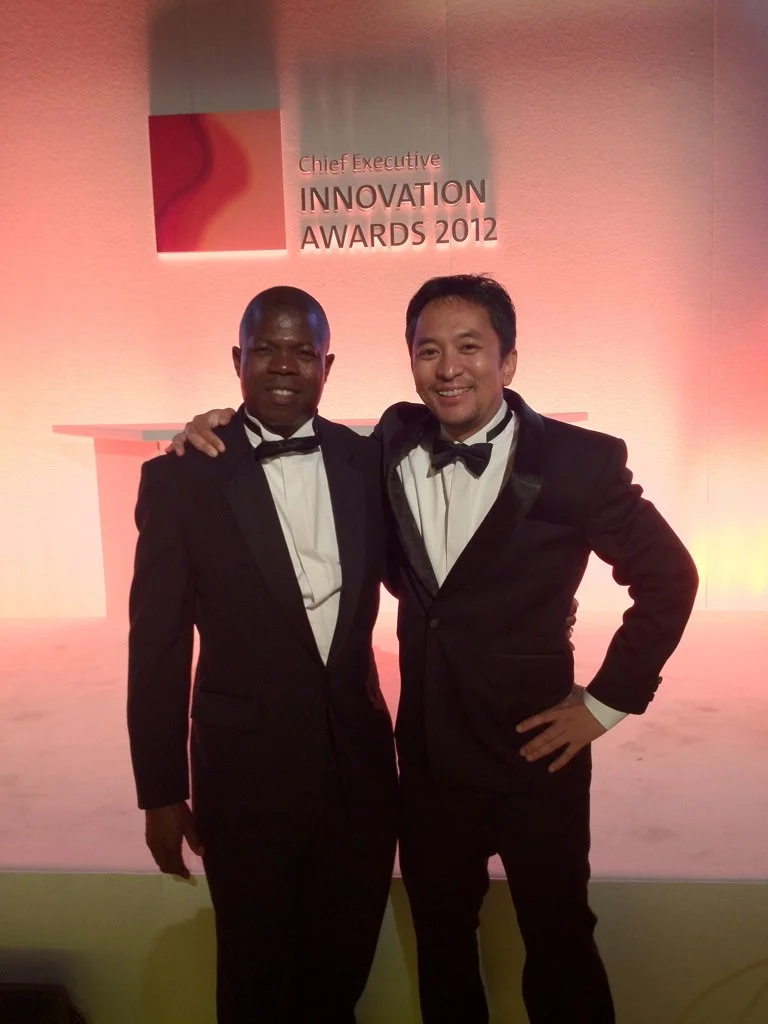
National workforce participation reached approximately 70%. The wider transformation generated more than US$1.5 billion in P&L impact according to the existing case evidence, alongside significant personnel-cost improvement and recognition through a CEO Innovation Award.
The strategic significance of the case lies in demonstrating that succession is not simply replacement planning. It is the deliberate creation of organisational capability capable of carrying performance, knowledge and accountability forward.
Client Context
Karachaganak Petroleum Operating is a complex international joint venture involving major global and national energy stakeholders.
Its operating environment combined mature infrastructure, demanding field-performance requirements, regulatory obligations, workforce-localisation expectations and significant stakeholder complexity.
The organisation needed to sustain current enterprise performance while simultaneously creating the leadership and technical capability required for its future.
This placed succession, workforce development and institutional capability firmly within the transformation agenda.
Strategic Challenge
Large organisations frequently treat succession as an HR process focused on identifying replacements for key roles.
The KPO context required something deeper.
Future leaders needed technical credibility, but they also needed broader judgment, stakeholder effectiveness, accountability and the capacity to operate across organisational boundaries.
At the same time, the organisation needed to build national capability in a manner that protected continuity and performance.
The enterprise question was therefore not merely:
Who could fill the next vacant role?
It was:
Does the organisation possess sufficient internal leadership depth to sustain performance as responsibilities, workforce composition and strategic demands change?
Enterprise Objectives
The leadership and capability agenda focused on:
developing leaders capable of broader enterprise responsibility
building a deeper internal succession pipeline
strengthening national workforce capability
reducing dependence on a narrower expatriate and specialist population
strengthening judgment and accountability
improving stakeholder effectiveness
transferring institutional knowledge
supporting localisation without compromising performance
increasing organisational resilience during and beyond transformation
Approach
1. Leadership Development Connected to Responsibility
Development was grounded in real operating responsibilities.
Leaders were challenged to think beyond functional performance and understand how their decisions affected enterprise priorities, stakeholders and longer-term outcomes.
2. Progressive Capability Building
Future leaders required increasing exposure, responsibility and decision-making experience.
Development therefore focused on building readiness progressively rather than waiting until senior vacancies appeared.
3. Succession as an Organisational System
Succession was treated as a capability-building process.
This meant strengthening the population from which future leaders could emerge, transferring knowledge and reducing dependence on individual incumbents.
4. National Capability Development
Structured recruitment, onboarding, mentoring and development supported the growth of Kazakh national capability.
The objective was both regulatory and strategic.
A stronger national workforce could increase continuity, retain organisational knowledge and provide a deeper foundation for future leadership.
5. Stakeholder and Enterprise Perspective
Leaders operating in a major international joint venture needed to influence beyond their formal authority.
Development therefore strengthened the ability to work across functions, organisational levels, partners and external stakeholders while maintaining accountability for execution.
Key Leadership and Organisational Shifts
From technical specialist to enterprise leader.
Leadership required broader commercial, organisational and stakeholder judgment.
From vacancy-driven succession to continuous pipeline development.
Future capability became an ongoing organisational responsibility.
From dependence on incumbents to deeper internal capability.
Knowledge and responsibility were progressively distributed.
From localisation as compliance to localisation as resilience.
National capability became linked to continuity and institutional strength.
From individual development to organisational capacity.
The purpose of leadership development extended beyond improving individual performance.
From short-term staffing to long-term institutional continuity.
Succession became connected to enterprise sustainability.
Outcomes
The wider transformation delivered several significant results:
national workforce participation reached approximately 70%
a deeper pool of national capability was established
leadership-development and succession practices strengthened the internal pipeline
organisational dependence on a narrower experienced population was reduced
personnel costs were reduced significantly within the wider localisation programme
the broader transformation generated more than US$1.5 billion in P&L impact according to the existing case evidence
innovation and cross-functional performance received recognition through a CEO Innovation Award
knowledge transfer strengthened organisational continuity and institutional resilience
These enterprise outcomes should not be attributed solely to leadership development. The importance of the leadership work was that it strengthened the organisational capacity required to support and sustain the wider transformation.
Client Impact
KPO developed greater depth within its workforce and future leadership population.
Technical and operational professionals were encouraged to expand their understanding of leadership from functional expertise toward judgment, accountability, stakeholder influence and enterprise responsibility.
This strengthened the organisation's ability to develop capability internally rather than rely indefinitely on a limited population of experienced specialists.
Business Impact
The direct business relevance of succession is often underestimated because its economic value appears over a longer horizon.
A shallow leadership pipeline creates dependency, continuity risk, knowledge loss and potentially expensive external replacement requirements.
A stronger pipeline increases organisational options.
At KPO, localisation and leadership development supported the broader enterprise transformation while contributing to a more sustainable workforce model.
The wider transformation's more than US$1.5 billion P&L impact provides the enterprise context in which that capability was being built.
Governance and Leadership Implications
Boards should regard succession depth as an enterprise-risk issue.
The relevant question is not simply whether a successor has been identified for the CEO or another critical executive.
Boards should understand whether the organisation has sufficient leadership depth several levels below the executive team, whether institutional knowledge can survive leadership transitions and whether future leaders are gaining the experiences required before vacancies arise.
In complex transformations, these questions become even more important because organisations must deliver current performance while simultaneously preparing a different leadership population for future responsibility.
Executive Lessons
Succession begins before a vacancy exists.
Leadership depth must be created deliberately over time.
Local capability can be strategic capability.
Workforce localisation creates greater enterprise value when it strengthens knowledge, continuity and future leadership capacity.
Technical excellence does not automatically create enterprise leaders.
Broader judgment and stakeholder responsibility require deliberate development.
Institutional knowledge must be transferable.
An organisation remains vulnerable when critical capability resides mainly in individuals.
Leadership pipelines are part of organisational resilience.
Boards should examine succession through the same enterprise-risk lens applied to capital, operations and strategy.
Selected Testimonial
“Mike brings clarity, structure, and strong team leadership to challenging work. He has a rare ability to organize complex tasks, align people around priorities, and make difficult issues easier to understand. His calm, disciplined approach helps teams stay focused and move forward with confidence.”
Massimo Viti, Retired Well Engineering Executive, KPO, Kazakhstan
Strategic Themes Demonstrated
Succession Planning
Enterprise Leadership
Leadership Pipeline Development
National Workforce Capability
Organisational Capability
Knowledge Transfer
Leadership Development
Institutional Resilience
Stakeholder Effectiveness
Transformation Support