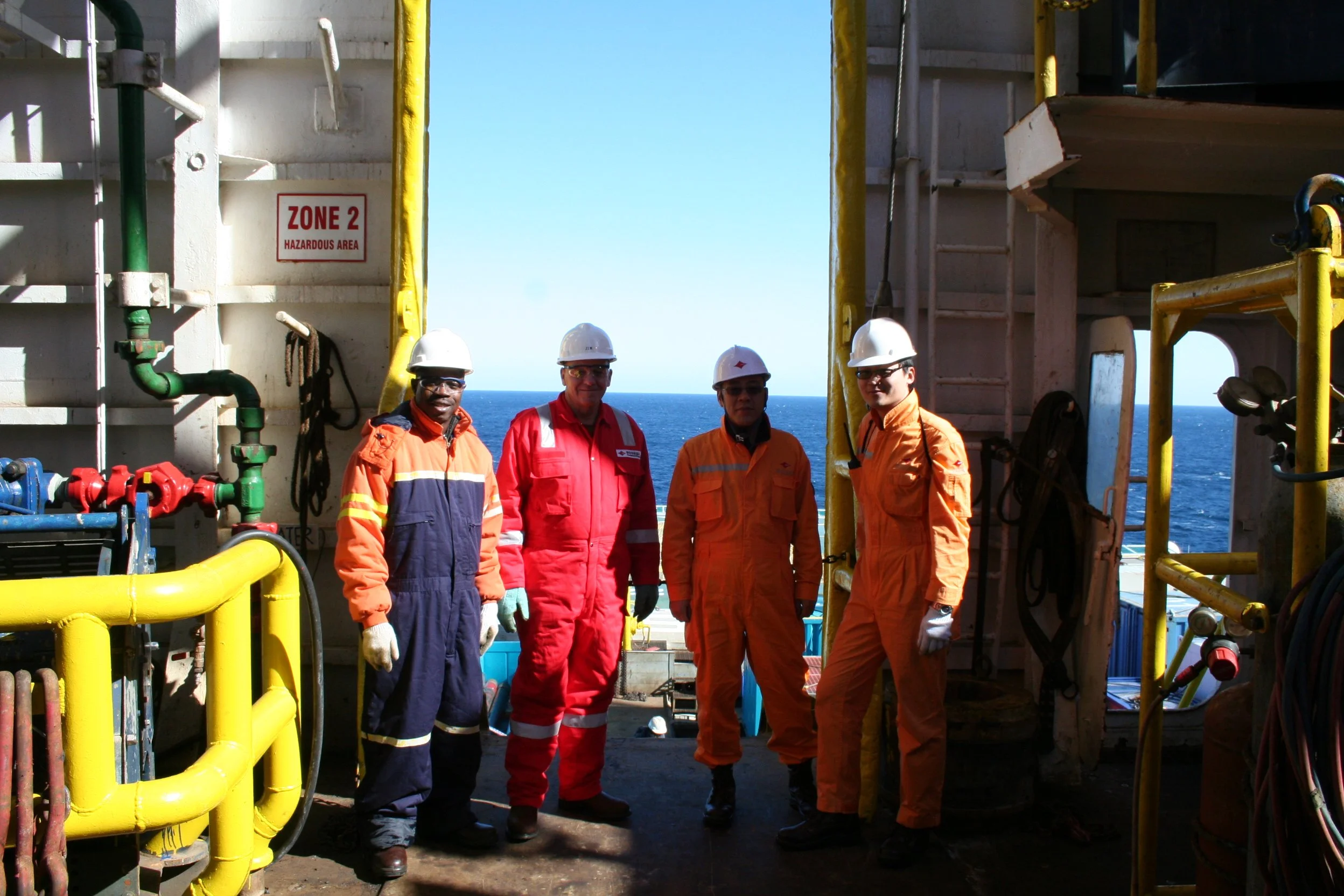
KNOC: Strategic Recovery
How disciplined diagnosis, aligned leadership and organisational capability helped restore production, recover economic value and strengthen resilience following an extended performance disruption.
Executive Summary
Korean National Oil Corporation faced a significant production disruption after approximately nine months of lost gas output of 52 MMscfd.
The issue had immediate operational consequences, but its significance extended further. Prolonged production loss affected revenue, stakeholder confidence and confidence in the organisation's ability to restore and sustain performance.
Far East Offshore engaged Protekz Inc., with Mike Etuhoko leading the strategic and technical advisory work supporting diagnosis and recovery.
Rather than treating the problem solely as an intervention task, the engagement combined root-cause diagnosis, recovery planning, cross-functional alignment and capability transfer.
Production of 52 MMscfd was restored within the projected timeline. Using the natural-gas price assumptions contained in the original case evidence, the restored production represented approximately US$120 million in annualised revenue capacity.
The case demonstrates the value of approaching recovery as an organisational and leadership challenge, not simply a technical repair.
Client Context
KNOC was confronting a prolonged interruption to gas production. Approximately 52 MMscfd had been unavailable for more than nine months.
At that stage, the issue could no longer be regarded solely as an operational problem. Prolonged underperformance affected economic value and created wider implications for stakeholder confidence, operating credibility and organisational resilience.
Restoration required speed, but urgency alone was insufficient. The organisation needed to understand why performance had failed, determine what would restore it and ensure that the recovery did not reproduce the weaknesses that had contributed to the disruption.
Strategic Challenge
Extended performance failure often generates pressure to move rapidly toward a preferred solution. That pressure can create a second risk: solving the visible symptom before understanding the underlying failure mechanism.
KNOC required a disciplined recovery process capable of distinguishing immediate technical causes from broader organisational and execution weaknesses.
The challenge therefore had three dimensions:
restore production,
recover economic value,
and improve the organisation's ability to sustain performance after recovery.
Enterprise Objectives
The recovery mandate focused on:
identifying the technical and organisational causes of the sustained outage
restoring 52 MMscfd of gas production
protecting value through disciplined recovery execution
establishing clearer accountability across the recovery effort
improving cross-functional coordination
strengthening management visibility over execution risk
rebuilding stakeholder confidence
transferring knowledge and capability to local teams
reducing vulnerability to recurrence
Approach
1. Root-Cause Diagnosis
The engagement began by establishing what had actually failed.
Technical evidence and organisational factors were examined together so that recovery decisions could address causes rather than symptoms.
This created a stronger basis for investment and intervention choices.
2. Strategic Recovery Roadmap
The diagnosis was translated into a structured recovery plan.
Priorities, workflows and risk controls were aligned around the central objective of restoring safe, reliable production.
The roadmap provided a disciplined sequence rather than a collection of disconnected interventions.
3. Cross-Functional Leadership Alignment
Recovery required multiple functions to work from a shared understanding of the problem and the path forward.
Leadership engagement created clearer ownership and reduced the risk of fragmented execution.
Accountability was connected more directly to specific recovery outcomes.
4. Execution Discipline
The focus shifted from activity completion to restoration of sustained performance.
Technical work, operational decisions and management attention were therefore evaluated against their contribution to the recovery objective.
5. Capability Transfer
Knowledge transfer and direct support strengthened local capability during execution.
This was important because successful recovery would have limited long-term value if the organisation remained dependent on external expertise to sustain the restored performance.
Key Leadership and Organisational Shifts
From urgent intervention to evidence-led recovery.
Decisions were grounded in diagnosis rather than pressure to act.
From a technical failure to an enterprise recovery issue.
Production, revenue, stakeholder confidence and organisational capability were considered together.
From fragmented activity to aligned accountability.
Functions worked toward a shared recovery outcome.
From restoring production to sustaining production.
Longer-term resilience became part of the recovery objective.
From external problem-solving to internal capability transfer.
Recovery was used to strengthen the organisation's ability to manage future performance challenges.
Outcomes
The recovery delivered:
restoration of 52 MMscfd of gas production
completion within the projected recovery timeline
approximately US$120 million in annualised revenue capacity using the market-price assumptions contained in the original case
strengthened cross-functional coordination
clearer leadership accountability
improved organisational preparedness for future disruptions
strengthened stakeholder confidence following successful restoration
transfer of knowledge and recovery capability to the client's teams
Client Impact
The organisation moved from an extended production loss to restored operating performance.
More importantly, the recovery process strengthened the connection between diagnosis, decision-making and execution.
Teams gained greater clarity around the causes of the problem, what needed to change and how responsibilities connected across the recovery effort.
This reduced the risk of treating restoration as a one-time technical event.
Business Impact
Restoring 52 MMscfd returned material productive capacity to the organisation.
At the cited 2009 natural-gas market assumptions, this represented approximately US$120 million in annualised revenue capacity.
For senior decision-makers, however, the broader value lies in what the recovery protected: operating credibility, future cash generation, stakeholder confidence and the organisation's ability to manage high-consequence disruption.
Governance and Leadership Implications
Strategic recovery requires a different leadership discipline from business-as-usual performance management.
When performance has already deteriorated, boards and executives need confidence that:
the organisation understands the real cause,
management is not prematurely converging on a preferred solution,
decision rights are clear,
recovery risks are visible,
and restored performance can be sustained.
Recovery governance should therefore focus not only on when normal operations will resume but on whether the weaknesses that permitted the disruption have actually been addressed.
Executive Lessons
Do not confuse urgency with diagnosis.
Rapid action based on the wrong problem can destroy additional value.
Recovery is an enterprise issue once material performance is affected.
Financial exposure, reputation, stakeholders and organisational capability become part of the decision.
Accountability accelerates recovery when ownership is explicit.
Complex problems become harder when responsibility is distributed but accountability is not.
Restoration is not resilience.
Performance has truly recovered only when the organisation can sustain it.
Every major recovery should leave the organisation stronger.
Capability transfer converts crisis response into institutional learning.
Selected Testimonials
“Mike, I appreciate your hard work on this project and recognize your significant contribution in identifying and resolving the issues out client faced. I am pleased with how successfully the project was completed.”
Simon Jang, General Manager of Far East Offshore, South Korea
“Mike, KNOC successfully completed its workover project safely and efficiently with your cooperation. Thank you for your dedicated support and efforts throughout the process.”
KNOC Engineering Manager Jeongyong Roh, South Korea
Strategic Themes Demonstrated
Strategic Recovery
Performance Restoration
Organisational Turnaround
Leadership Under Pressure
Root-Cause Diagnosis
Accountability
Stakeholder Confidence
Transformation Execution
Organisational Resilience
Enterprise Value Recovery