Gain Your Edge | #37
The New Boundary Between Human Judgment and Machine Output
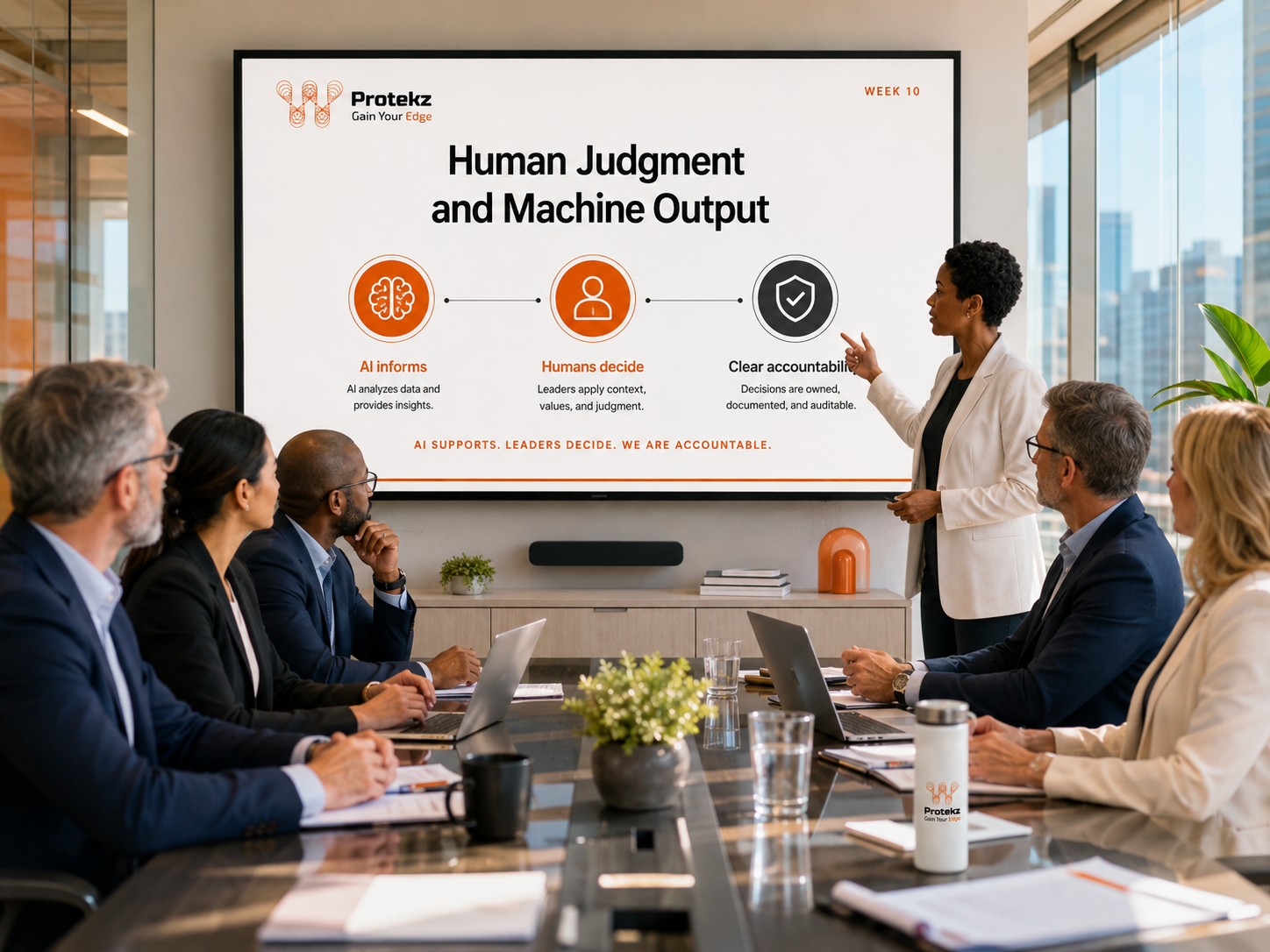
AI is changing the boundary between analysis and judgment.
It can summarize faster.
Detect patterns earlier.
Generate options quickly.
Compare scenarios.
Flag anomalies.
Support decisions that once required days of manual work.
That is useful.
But usefulness is not the same as accountability.
As AI becomes embedded in decision processes, boards and executives must become much clearer about where machine output ends and human judgment begins.
This is not a theoretical issue.
AI may inform a credit decision, screen a supplier, assess operational risk, support capital allocation, evaluate talent, summarize legal exposure, or prioritize customer response.
In each case, the question is not only whether the output is accurate.
The deeper question is who owns the judgment.
Last week, I argued that AI is not just a technology question. It is reshaping decision systems. This week goes to the next layer: the boundary between augmentation and accountability.
AI can inform.
AI can recommend.
AI can rank.
AI can detect.
AI can accelerate.
But AI should not quietly absorb responsibility.
That responsibility must remain visible.
When accountability is unclear, risk becomes distributed in dangerous ways. The system generated the output. The vendor provided the model. The executive approved the process. The committee reviewed the recommendation. The board received the summary.
Everyone was involved.
No one fully owned the judgment.
That is where governance weakness begins.
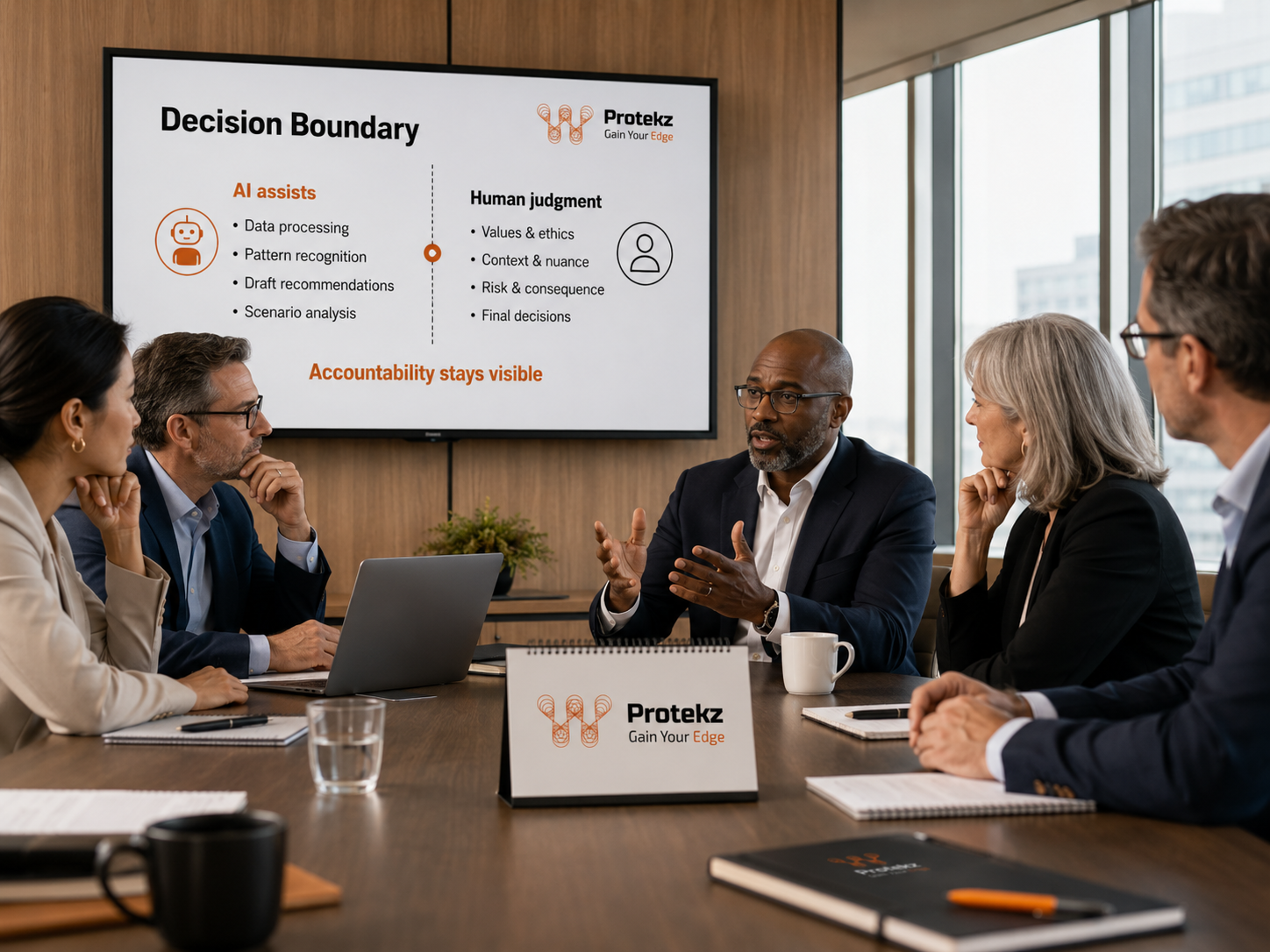
For boards, the issue is not to approve or reject AI in broad terms. The issue is to ask where AI is being used in consequential decisions, how outputs are challenged, who has authority to override them, and where final accountability sits.
For CEOs and executive teams, the discipline is to define decision boundaries before AI becomes routine. Some decisions can be supported by AI. Some can be partially automated. Some must remain explicitly human-led because the consequences involve ethics, reputation, safety, strategy, or enterprise value.
The strongest organizations will not treat human oversight as a checkbox.
They will make judgment visible by design.
They will clarify who decides, who challenges, who escalates, and who remains accountable when AI shapes the recommendation.
The board-level question this week is:
Which decisions should never be delegated without clear human accountability?
Because the future of AI governance will not be defined only by smarter tools.
It will be defined by whether leaders remain accountable for the judgments those tools influence
Mike Etuhoko, MBA, AccBD, GCB.D, CCB.D, ACC
Founder & CEO, Protekz Inc.
Sloan Fellow, London Business School
🔗 LinkedIn: https://www.linkedin.com/in/mike-etuhoko
