
Gain Your Edge | #43
BOARD BRIEF
Enterprise Value Is Protected Before the Crisis
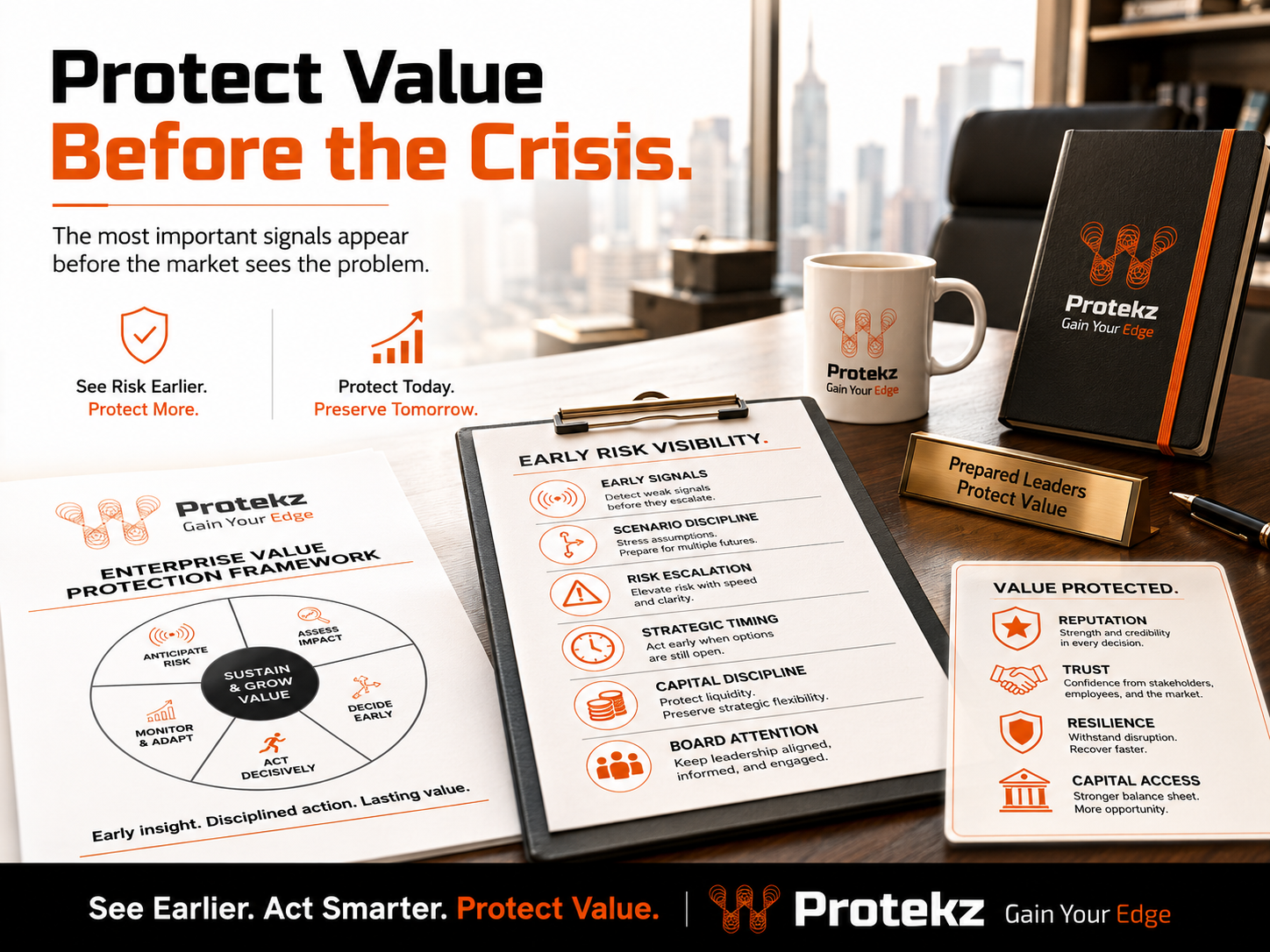
Enterprise value is rarely damaged at the point of crisis.
By then, the visible event is usually the consequence of earlier signals that were missed, minimized, or not escalated with sufficient discipline.
A weak operating signal was treated as noise.
A reputational concern stayed below board level.
A capital assumption was not stress-tested.
A stakeholder shift was underestimated.
A risk was documented but not translated into action.
A difficult trade-off was deferred until options narrowed.
This is where boards and senior executives need to sharpen attention.
Value protection is not crisis management. Crisis management begins after exposure becomes visible. Value protection begins earlier, when the organization still has time, credibility, and strategic choice.
For boards, the core issue is not only whether management can respond effectively when a crisis occurs. The deeper issue is whether the board is receiving the right signals early enough to influence outcomes before value is impaired.
Reputation, stakeholder confidence, capital access, regulatory trust, and operational resilience are all shaped long before visible failure. They are shaped through governance rhythm, risk escalation, capital discipline, leadership candour, and the quality of challenge around major decisions.
Over the past three weeks, Gain Your Edge has examined three connected disciplines:
Capital discipline asks what the organization is committing to, and under which assumptions.
Risk architecture asks whether the risk system improves judgment or mainly documents exposure.
Strategic timing asks whether leaders are moving at the right moment, with the right readiness, before the window changes.
Together, these disciplines form the foundation of enterprise value protection.
The practical implication is clear: boards and executive teams should not wait for risk to become material before giving it serious attention. In complex environments, the most important signals often appear early, unevenly, and without consensus.
That is why leadership judgment matters.
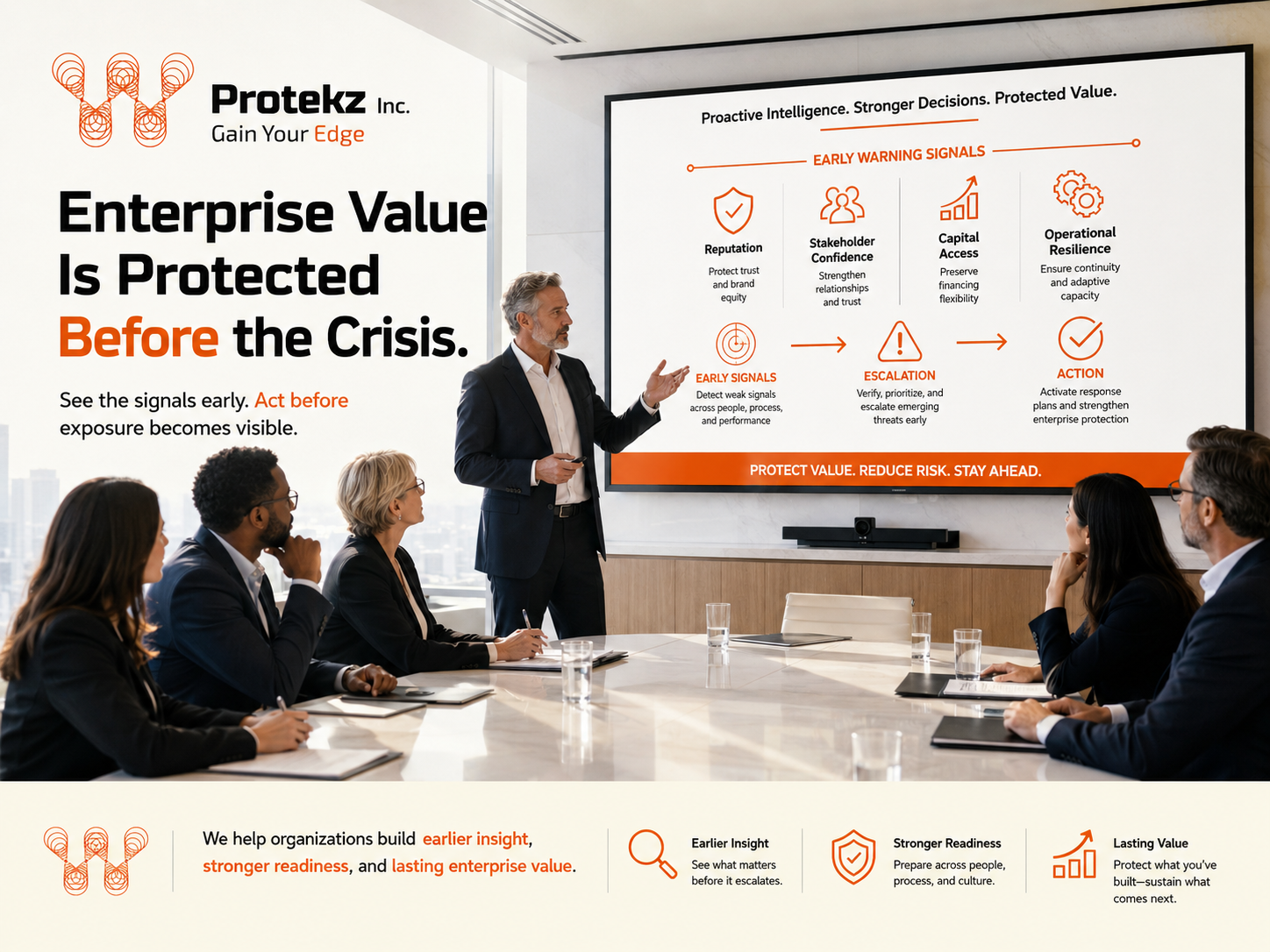
Senior teams must be willing to examine uncomfortable patterns before they become unavoidable facts. Boards must ask not only what has happened, but what is beginning to change. Executives must connect risk, capital, timing, and stakeholder confidence before the market forces the connection.
The strongest organizations do not prove resilience by recovering well from every crisis.
They protect value by noticing earlier, deciding sooner, and acting with greater discipline before the crisis becomes visible.
The board-level question this week is:
What early signals should receive board attention before they become material events?
Because by the time the market sees the crisis, the most important value-protection decisions may already have been missed.
