
Gain Your Edge | #44
BOARD BRIEF
The Board as a Decision-Quality Steward
Boards are accustomed to reviewing major decisions.
Management presents the case. Risks are outlined. Alternatives are considered. A recommendation is made. The board challenges, approves, defers, or redirects.
That remains essential.
But in high-consequence environments, effective oversight requires something more.
The board must also understand the quality of the decision process that produced the recommendation.
That is becoming a critical governance issue.
Major enterprise decisions increasingly cut across strategy, capital allocation, AI, cyber, ESG, risk, reputation, leadership capability, and stakeholder confidence. The consequences are interconnected, while governance processes are often still organised in functional silos.
A capital decision may introduce technology and transition risk.
An AI decision may create regulatory and reputational exposure.
A growth decision may alter the organisation’s risk profile.
A strategic choice may create consequences that only become visible years later.
For boards, the question therefore cannot stop at:
Is this recommendation acceptable?
It must also include:
Was the decision process sufficiently rigorous for the consequence of the decision?
That means looking beyond the quality of the board paper.
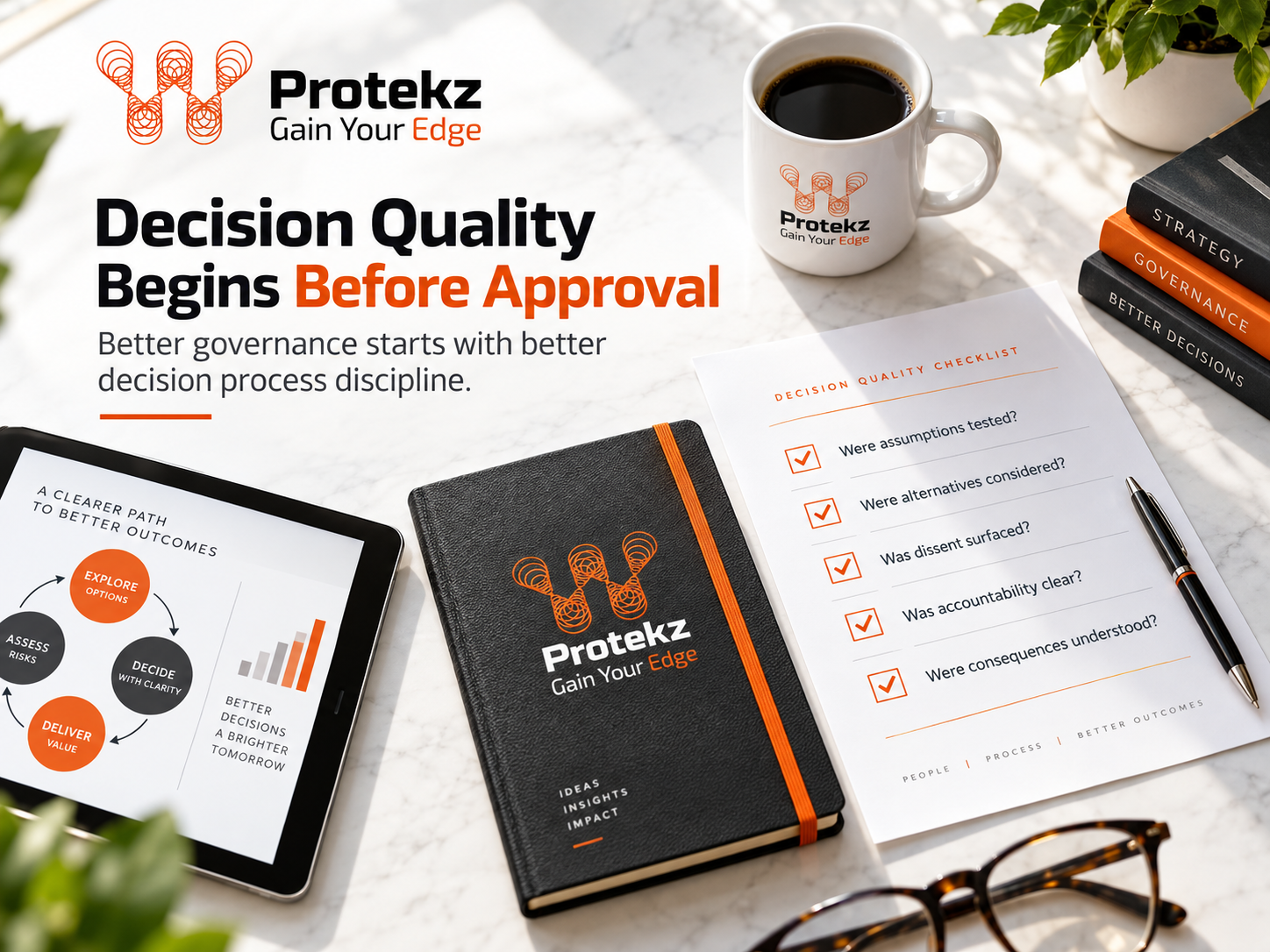
Directors should be able to see whether critical assumptions were tested, credible alternatives were considered, dissenting views were surfaced, material trade-offs were explicit, risk appetite informed the recommendation, and accountability for execution was clear.
A persuasive recommendation is not necessarily evidence of a high-quality decision.
Strong analysis can rest on fragile assumptions.
Well-defined options can disguise poorly understood trade-offs.
Comprehensive risk reporting can still understate the real exposure.
Clear executive sponsorship can coexist with diffuse accountability.
This is where board stewardship becomes important.
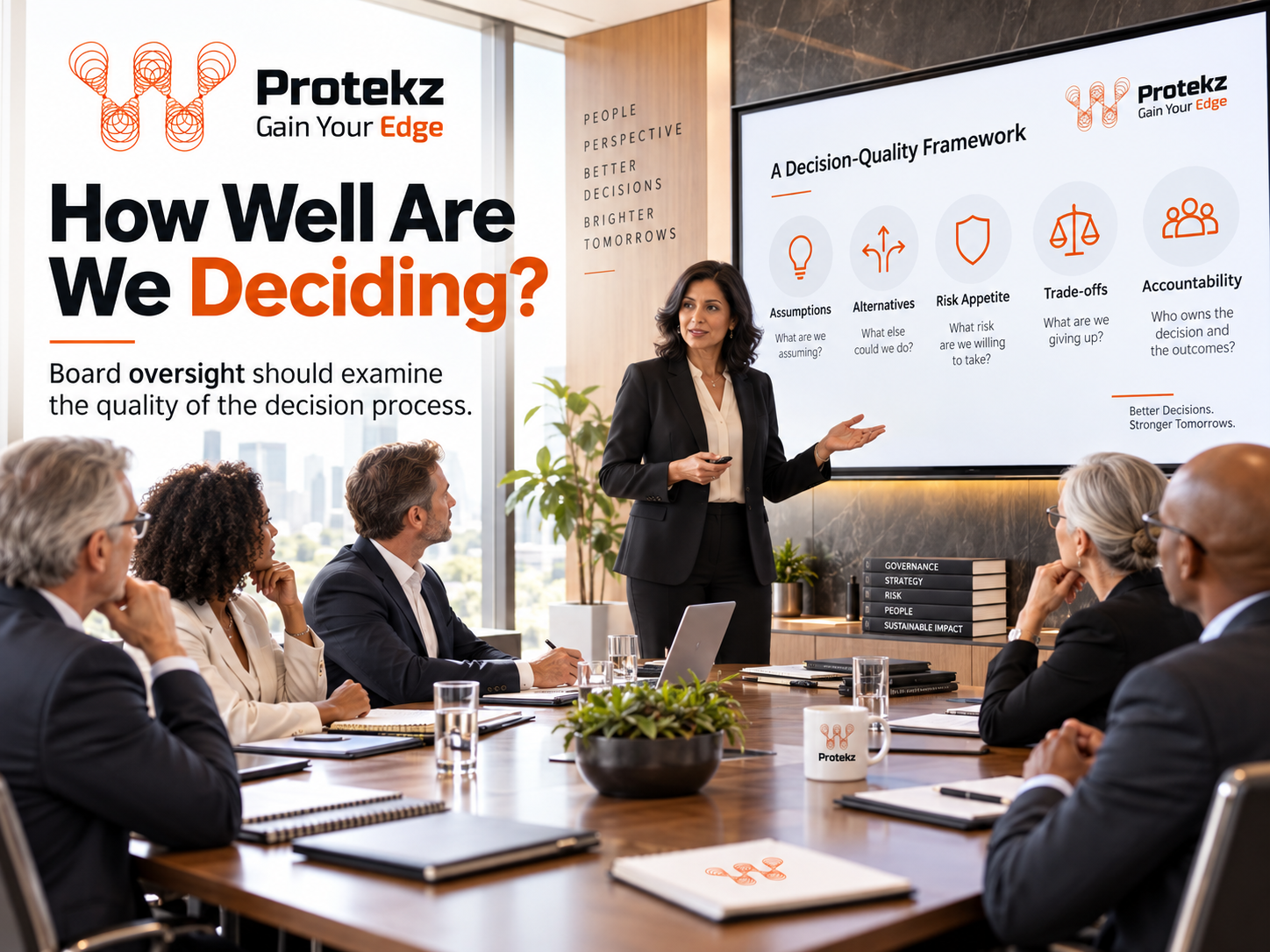
The board does not need to step into management’s role. Its responsibility is to create confidence that the organisation’s decision system is capable of producing sound judgment when the stakes are high.
For CEOs and executive teams, this level of challenge should not be viewed as interference. Done well, it strengthens management thinking before capital, reputation, strategic flexibility, or enterprise value are placed at risk.
Boardroom Reflection
How does our board determine whether management’s decision process is rigorous enough before approving a major strategic, capital, technology, or risk decision?
Because the quality of governance is not revealed only by the decisions a board approves.
It is revealed by the quality of judgment the board helps the organisation sustain.
