
Gain Your Edge | #39
Decision Quality in AI-Enabled Organizations
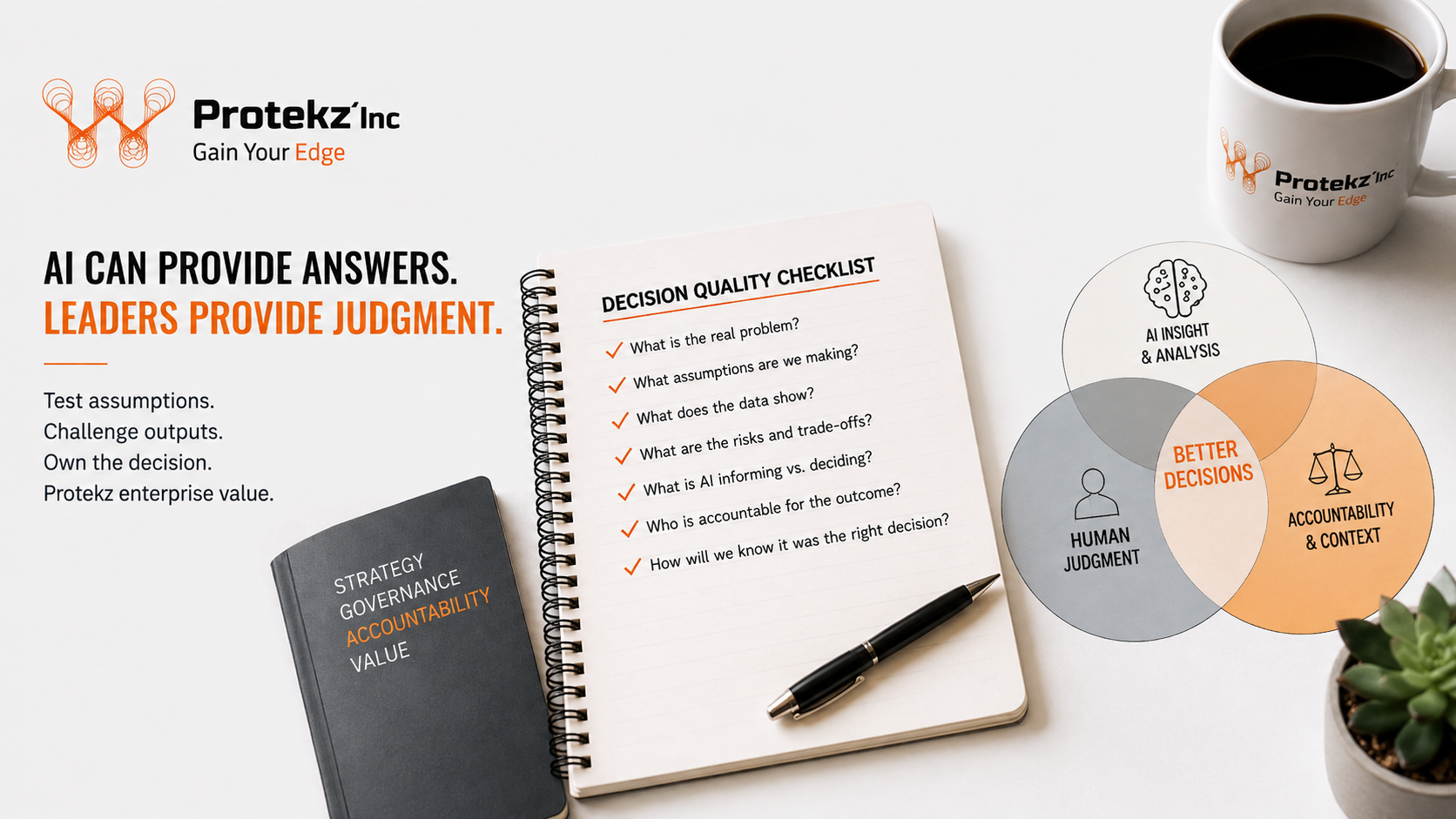
AI can improve analysis.
It can process more information, generate scenarios, detect patterns, summarize complexity, and support faster recommendations.
That is valuable.
But better analysis does not automatically produce better decisions.
AI can also amplify bias.
Create false confidence.
Hide assumptions inside opaque systems.
Encourage over-reliance.
Accelerate weak judgment.
Make poor choices appear more sophisticated than they are.
That is why AI-enabled organizations need more than adoption.
They need disciplined integration.
Over the past three weeks, I have explored AI as a governance and decision-system issue.
AI is not just a technology question.
Human judgment must remain visible and accountable.
Governance must keep pace with AI-enabled decision speed.
This week brings the argument together.
The real leadership question is not whether AI can help leaders decide faster.
It is whether AI is helping the organization decide better.
That distinction matters.
Decision quality depends on more than information volume or analytical speed. It depends on how decisions are framed, who challenges the assumptions, what trade-offs are made explicit, how risk is understood, where accountability sits, and whether leaders remain responsible for judgment.
AI can strengthen that process.
But only if leaders design the process deliberately.
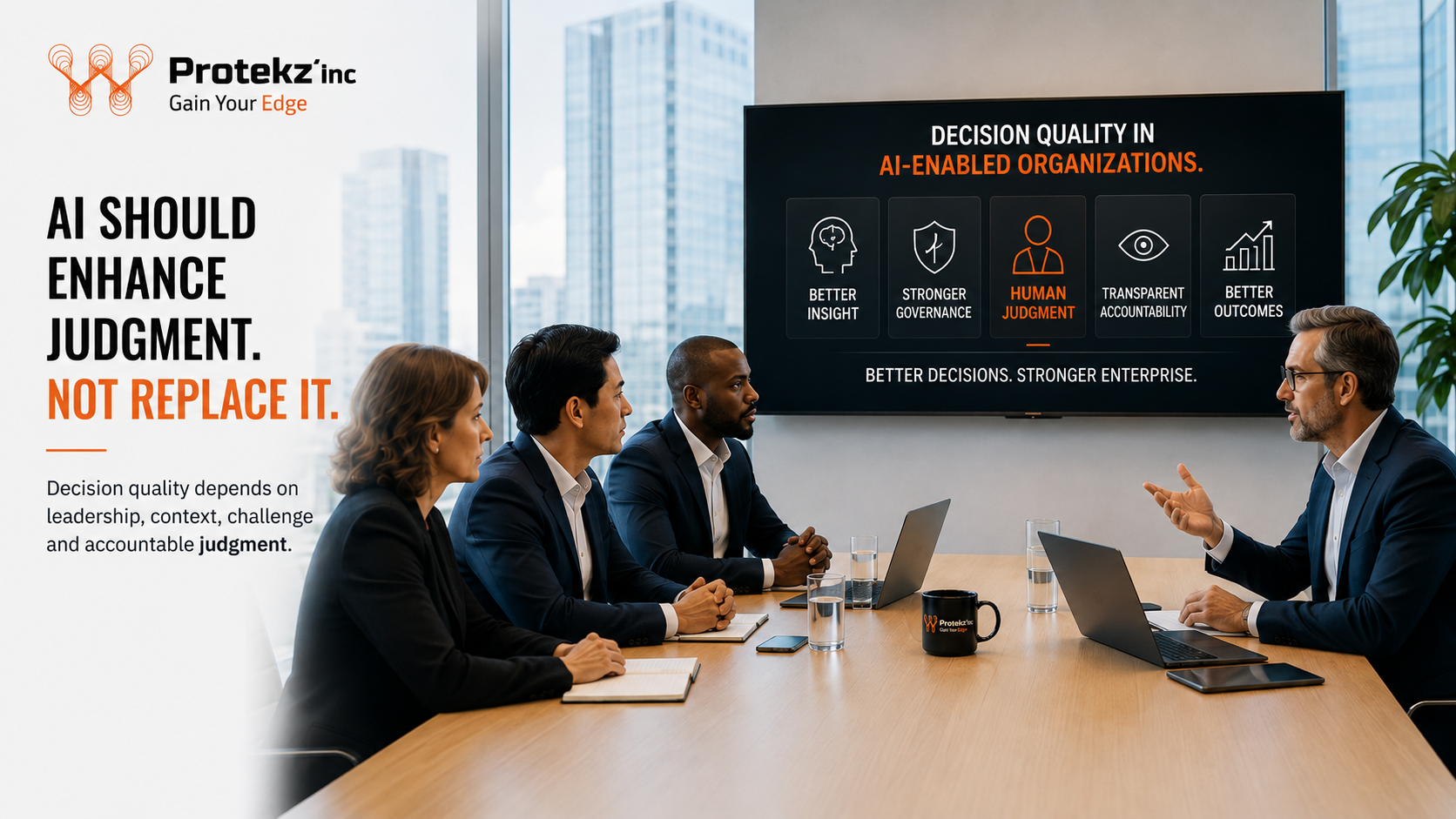
For boards, this means asking how AI is influencing consequential decisions, not simply whether AI tools have been approved. The board should understand where AI is used, how outputs are tested, what risks are escalated, and where human accountability remains clear.
For CEOs and executive teams, the work is practical. AI should be integrated into decision routines in a way that improves clarity, not confusion. It should sharpen judgment, not replace it. It should increase visibility, not create a new layer of opacity.
The strongest organizations will not treat AI as a shortcut around leadership discipline.
They will use it to strengthen the discipline itself.
They will ask better questions.
Test assumptions earlier.
Expose risk faster.
Clarify accountability.
Challenge confidence before it becomes commitment.
That is decision quality in an AI-enabled organization.
The board-level question this week is:
How would we know whether AI is improving decision quality, not just decision speed?
Because the future advantage will not belong to organizations that simply use AI faster.
It will belong to those that govern judgment better.
