
Gain Your Edge | #40
BOARD BRIEF
Capital Discipline Under Competing Futures
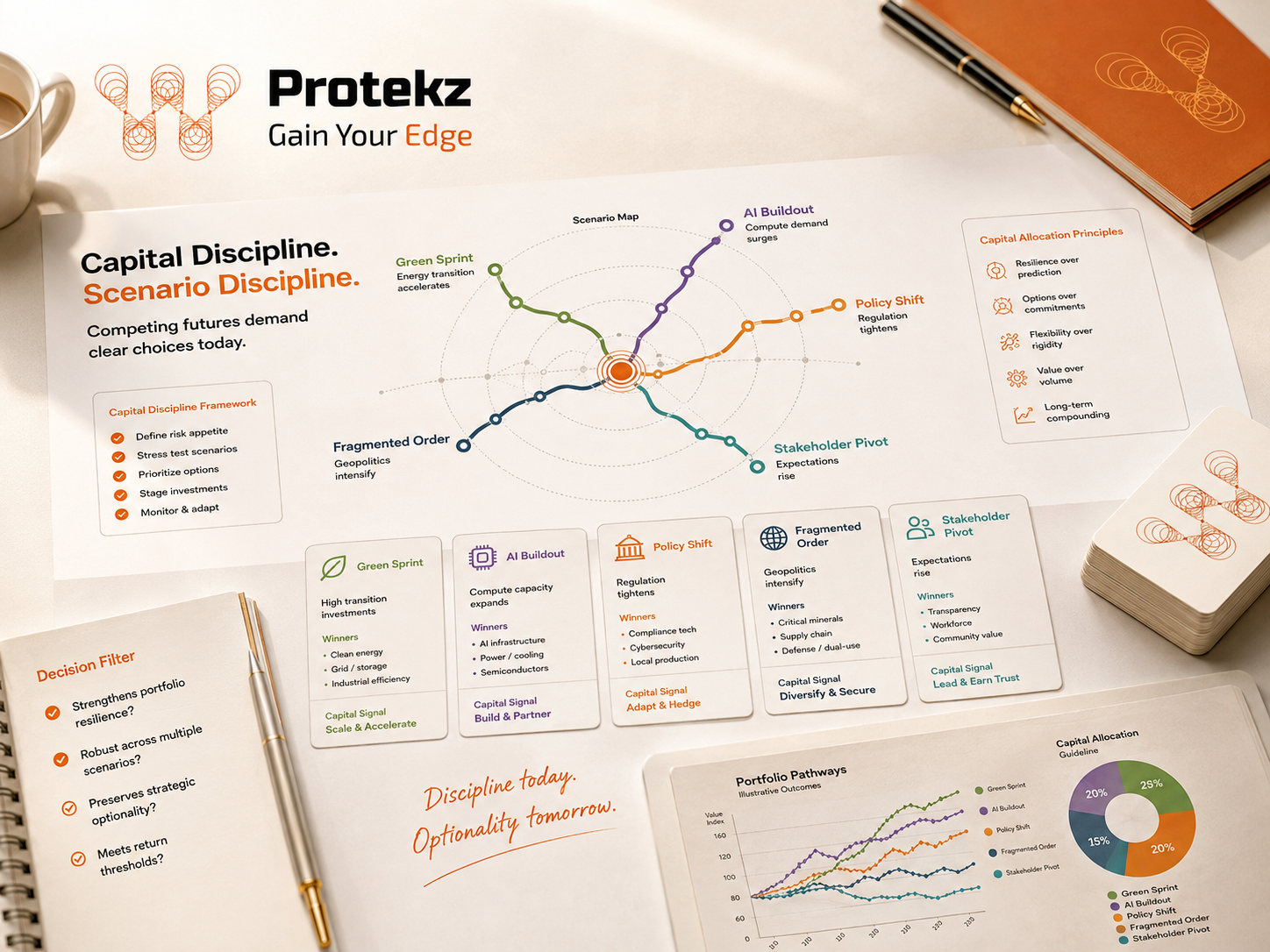
Capital allocation used to depend heavily on forecast confidence.
Market outlook.
Demand projections.
Regulatory direction.
Technology maturity.
Cost assumptions.
Stakeholder expectations.
Leaders could test the numbers, debate the risks, approve the investment, and proceed with reasonable confidence that the future being planned for was broadly understood.
That world is fading.
Today, the future is not simply unclear.
It is contested.
Energy transition is reshaping investment logic. AI infrastructure is creating new capital demands. Regulation is shifting at different speeds across jurisdictions. Geopolitics is influencing supply chains, markets, and industrial strategy. Stakeholders are asking harder questions about long-term value, resilience, and legitimacy.
In this environment, capital discipline cannot rely only on better financial modelling.
It requires scenario discipline.
That means leaders must become more explicit about the future they are assuming when they approve capital.
Which market future are we funding?
Which regulatory pathway are we betting on?
Which technology assumptions must hold?
Which stakeholder expectations could change the economics?
Which risks are we accepting because we believe timing matters?
Which options are we preserving if the future moves differently?
Last month, Gain Your Edge focused on AI-enabled decision systems. The central argument was clear: better analysis does not automatically produce better judgment.
This month applies that discipline to capital, risk, and strategic timing.
Capital decisions are among the clearest tests of leadership judgment. They convert belief into commitment. Once capital is deployed, assumptions become harder to reverse. Optionality narrows. Reputation becomes attached. Stakeholders begin to expect delivery.
That is why capital discipline must move beyond asking whether the numbers work.
The stronger question is whether the assumptions behind the numbers have been sufficiently challenged.
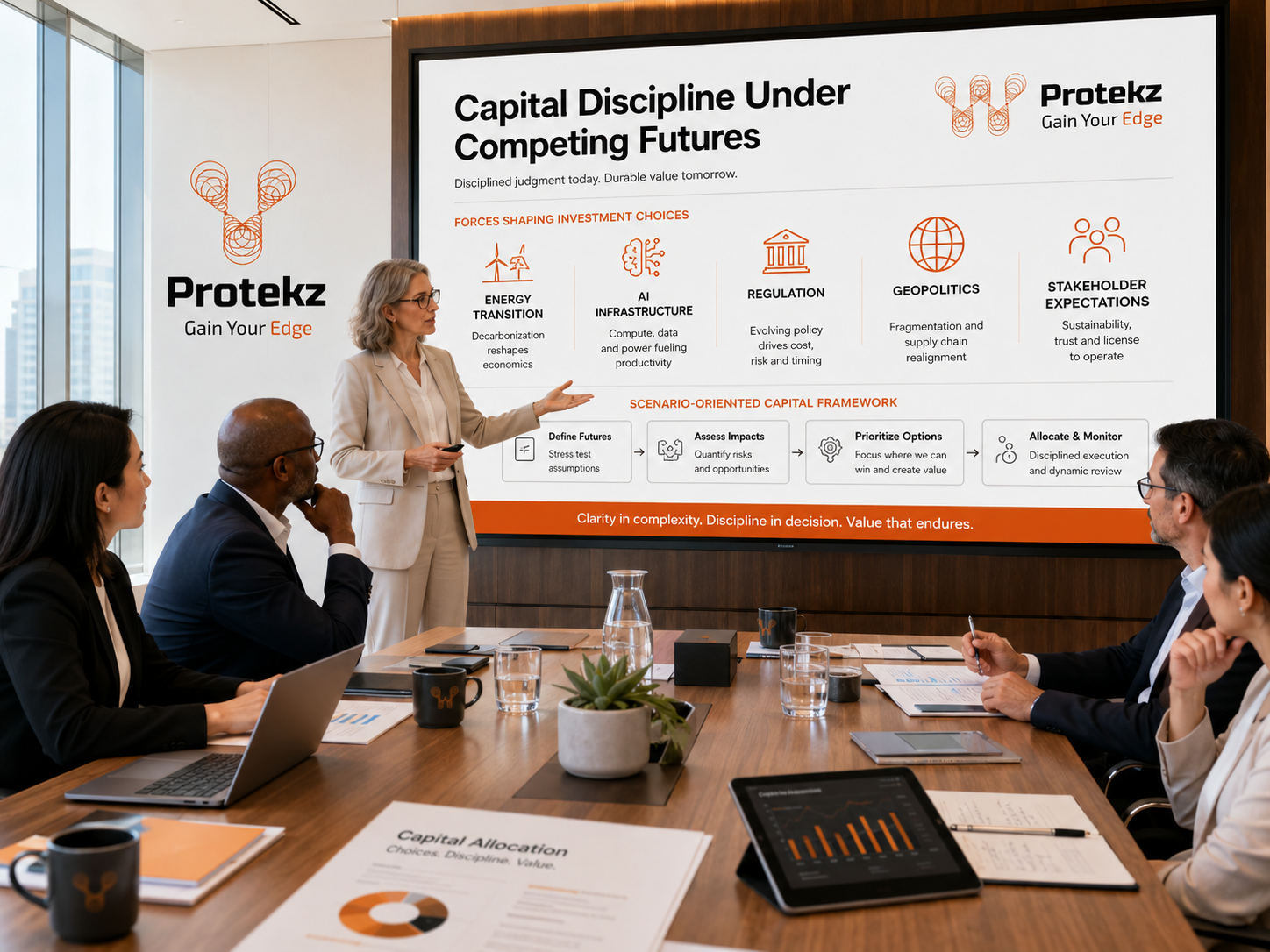
For boards, this is a governance issue. Approving capital is not only about approving spend. It is about understanding the strategic logic, risk appetite, timing, alternatives, and conditions under which the decision should be revisited.
For CEOs and executive teams, it means resisting false precision. A spreadsheet can make a contested future look settled. Scenario discipline keeps uncertainty visible without creating paralysis.
The strongest organizations will not wait for certainty.
They will build capital choices that are disciplined, adaptive, and honest about the assumptions being made.
The board-level question this week is:
Which assumptions behind our capital decisions are most vulnerable to change?
Because in contested futures, capital discipline is not just about choosing the best investment.
It is about knowing which future you are choosing to believe.
