Gain Your Edge | #22
The Edge of Talent Architecture — Designing Leadership Depth, Not Dependency
“Organizations do not become fragile because people leave. They become fragile because leadership depth was never built.”
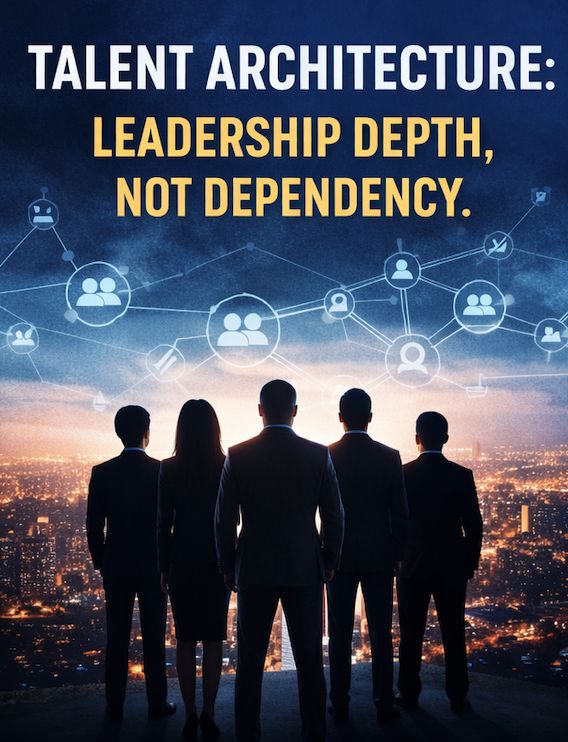
In many organizations, leadership strength is still judged by the capability of a few visible individuals: the CEO, a small group of executives, or trusted decision-makers.
But in periods of complexity and change, dependence on a few strong leaders becomes a structural risk.
What sustains performance is not individual brilliance alone. It is leadership architecture.
Talent architecture is the deliberate design of leadership depth across the enterprise so that capability, judgment, and decision-making are distributed rather than concentrated.
Why Leadership Depth Matters Now
Boards and executive teams are operating amid overlapping pressures:
digital and AI-driven transformation
shifting regulation and policy
rising expectations around sustainability and governance
workforce changes in skills and engagement
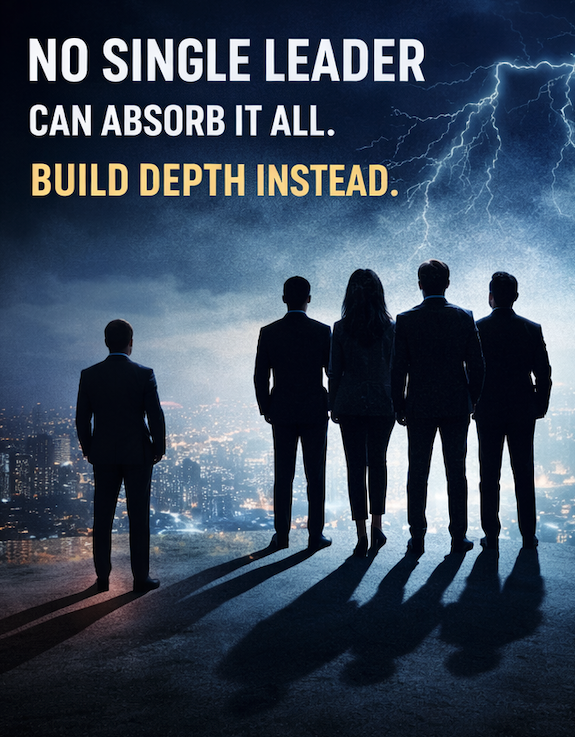
No single leader can absorb all of this complexity alone.
When leadership capacity is concentrated at the top, decisions bottleneck, execution slows, and succession becomes reactive.
Leadership depth protects continuity. It helps organizations adapt, execute, and remain steady as roles evolve or individuals transition.
From Talent Management to Talent Architecture
Traditional talent management often focuses on training, reviews, and periodic succession planning.
Talent architecture is more structural. It asks a harder question:
How is leadership capability distributed across the organization?
Organizations with strong talent architecture intentionally build:
Succession readiness
Critical roles have credible successors identified and developed before transition becomes urgent.
Bench strength
Emerging leaders gain exposure to strategic issues before stepping into senior roles.
Distributed leadership
Decision authority is designed so capable leaders across the organization can act with clarity and confidence.
In this model, leadership becomes a system, not a dependency.
The Board’s Role in Leadership Continuity
Boards often focus on CEO and executive performance.
But resilience depends on the depth behind them.
Effective boards ask:
How strong is the pipeline of future leaders?
Which roles remain overly dependent on one individual?
Are emerging leaders gaining the judgment required for greater responsibility?
Is leadership development aligned with future strategy, not only current operations?
These are not HR questions alone. They are governance and continuity questions.
Leadership That Outlasts Individuals
Organizations that endure do not rely on exceptional individuals alone. They build systems that survive leadership transitions without losing direction or momentum.
That requires leaders to think beyond their own tenure.
Not only, How do we deliver this quarter?
But also, What leadership capability will this organization need five years from now?
That is the work of talent architecture.
Final Thought
Great leaders build strong organizations.
Exceptional leaders build organizations that remain strong after they are gone.
That is the edge.
Mike Etuhoko, MBA, AccBD, GCB.D, CCB.D, ACC
Founder & CEO, Protekz Inc.
Sloan Fellow, London Business School
🔗 LinkedIn: https://www.linkedin.com/in/mike-etuhoko
